

5 Durable Materials for Outdoor Sports Team Signage
Last Updated: October 25, 2026
Quick Summary
Aluminum is the best material for outdoor sports signage that stays up year-round, resisting rust and holding printed graphics flat through sun, rain, and frost. For windy fences and open fields, mesh banners are the safest choice because their open weave lets air pass through instead of catching it.
- Aluminum panels on chain-link fences need four corner brackets plus center supports on anything wider than 0.9 meters.
- A laminated aluminum sign typically holds legible graphics for three to five outdoor seasons in most Canadian climates.
- Coroplast is the practical choice for event-day and single-season signs but has the shortest outdoor lifespan on the list.
- Mesh banners should have grommets every 45 to 60 centimeters along all four sides, set in a reinforced hem.
- Heavy-duty 18oz vinyl suits sponsor and championship banners but needs wind holes or mesh in exposed spots.
Table of Contents
- The 5 Durable Materials Ranked for Outdoor Sports Team Signage
- 1. Aluminum: The Longest-Lasting Best Material for Outdoor Signs
- 2. Aluminum Composite Panel (ACM/Dibond) for Rigid Team Boards
- 3. Coroplast Signs for Sports Events and Short Seasons
- 4. Mesh Banners for Windy Conditions on Fences and Fields
- 5. Heavy-Duty 18oz Vinyl for Sponsor and Championship Banners
- Outdoor Team Signage Maintenance That Extends Every Material
- Ordering Your Team's Signage Package from Artsoft
- Frequently Asked Questions
The 5 Durable Materials Ranked for Outdoor Sports Team Signage
Picking materials for outdoor sports signage comes down to five options, and aluminum wins on lifespan while mesh wins on wind safety for outdoor sports signage. This guide from Artsoft Expo Solutions Inc. ranks the top 5 durable materials for outdoor sports team signage by weather resistance, print life, mounting demands, and cost over time. Most buying guides list materials without asking where the sign actually lives. A fence banner in an open field faces different forces than a sponsor board bolted to a clubhouse wall.
Below, we break down each material by sport, venue, and season, so you can match the substrate to the exposure rather than guessing.
How We Ranked These Materials
We scored each material on four criteria: weather resistance (UV, moisture, wind), print durability and color retention, installation and mounting demands, and total cost of ownership across a replacement cycle. Sports venues punish signage in ways retail storefronts do not. Signage sits in full sun for a whole season, takes rain and frost, and catches wind gusts that a wall-mounted business sign never sees.
Rankings favor materials that hold graphics and structure across multiple seasons, not just the cheapest sheet price.
| Rank | Material | Best For | Main Trade-Off |
|---|---|---|---|
| 1 | Aluminum | Permanent building and fence signs | Heaviest and highest upfront cost |
| 2 | ACM/Dibond | Rigid team boards and sponsor panels | Edges need care in high wind |
| 3 | Coroplast | Short seasons and event-day signs | Shortest outdoor lifespan |
| 4 | Mesh banner | Windy fences and open fields | Lower print resolution up close |
| 5 | 18oz vinyl | Sponsor and championship banners | Solid surface catches wind |
1. Aluminum: The Longest-Lasting Best Material for Outdoor Signs
Aluminum is the best material for outdoor signs that stay up year-round, because it resists rust, holds rigid shape, and keeps printed graphics flat through sun, rain, and frost.
The metal takes direct sun without warping, and it does not absorb moisture the way corrugated plastic can. That makes it the default pick for building signage and fixed installations where you want to print once and forget it.
Why Aluminum Wins on Sports Venues
A fence-mounted aluminum panel faces a different load case than a wall-mounted business sign. On an open field, a 0.6-meter by 0.9-meter aluminum sheet acts as a solid sail: a 30 km/h gust produces roughly 24-48 pounds of force per square meter on a flat plate, which translates to 11-14 kilograms of pull on the mounting points.
Aluminum also holds print better than banner stock because the graphics sit on a coated flat surface rather than a flexible weave. A common pattern in sports signage is a 0.040-inch or 0.063-inch aluminum sheet with a UV-cured print and a clear laminate overcoat.
Mounting and Hardware Specifics
- Fence panels: Use aluminum panels with pre-drilled corner holes and stainless steel bolts or heavy-duty zip ties rated for outdoor UV exposure. Avoid mild steel hardware, which stains the sign face with rust bleed within one season.
- Building and fieldhouse signs: A 0.063-inch sheet is the practical minimum for anything larger than 0.45 by 0.6 meters; thinner sheets oil-can and show waviness under raking light.
- Scoreboard surrounds and sponsor boards: Aluminum accepts direct-mount standoffs and frame systems, which keeps the face flat and lets you swap panels without replacing hardware.
Print Durability and Replacement Cycle
A laminated aluminum sign typically holds legible graphics for three to five outdoor seasons in most Canadian climates, depending on sun exposure and whether the face is cleaned annually. The panel itself outlasts the print: when colors fade, you can often strip and re-print the same sheet rather than replacing the substrate. That reusability is the hidden cost advantage over banner materials, which are typically single-life products.
- Pros: Excellent rust and weather resistance, rigid and flat, long print life, works with lighting options such as LED or solar fixtures, and the substrate can be re-printed when graphics fade.
- Cons: Heavier than plastic, needs solid mounting and stainless hardware, and costs more upfront than banner materials.
Best for: permanent venue signage, fieldhouse and clubhouse signs, fence panels that stay up across seasons, and scoreboard surrounds. Skip if: you need a temporary or portable sign you will move every weekend, or if the mounting surface cannot accept bolted hardware.
2. Aluminum Composite Panel (ACM/Dibond) for Rigid Team Boards
Aluminum composite panel, often called ACM or Dibond, is a rigid sign material made of two thin aluminum skins bonded to a plastic core. It gives you the flat, professional face of metal at a lighter weight, which makes it easier to mount and handle than solid aluminum sheet.
For sports teams, ACM suits rigid team boards, sponsor recognition panels, and scoreboard surrounds. It holds a crisp print and stays flat, so logos and player names read cleanly from a distance.
- Pros: Lightweight and rigid, flat print surface, strong weather resistance, versatile for building and field signage.
- Cons: Costs more than corrugated plastic, and large panels need proper framing against wind exposure.
Best for: rigid team boards, sponsor panels, and permanent display boards. Skip if: your budget only covers short-term event signage.
3. Coroplast Signs for Sports Events and Short Seasons
Coroplast signs are lightweight, corrugated plastic sheets, and they are the practical choice for coroplast signs for sports events where the sign only needs to last a weekend or a single season.
We see them most at tryout days, registration tables, tournament wayfinding, and field directional signage. The trade-off is lifespan.
- Pros: Low cost, lightweight, easy to install with step stakes, waterproof and UV-printed options available.
- Cons: Shortest outdoor lifespan on this list, can crack in deep cold, and less rigid in large sizes.
Best for: event-day signage, registration and wayfinding, and single-season field signs. Skip if: the sign must survive multiple winters outdoors.
4. Mesh Banners for Windy Conditions on Fences and Fields
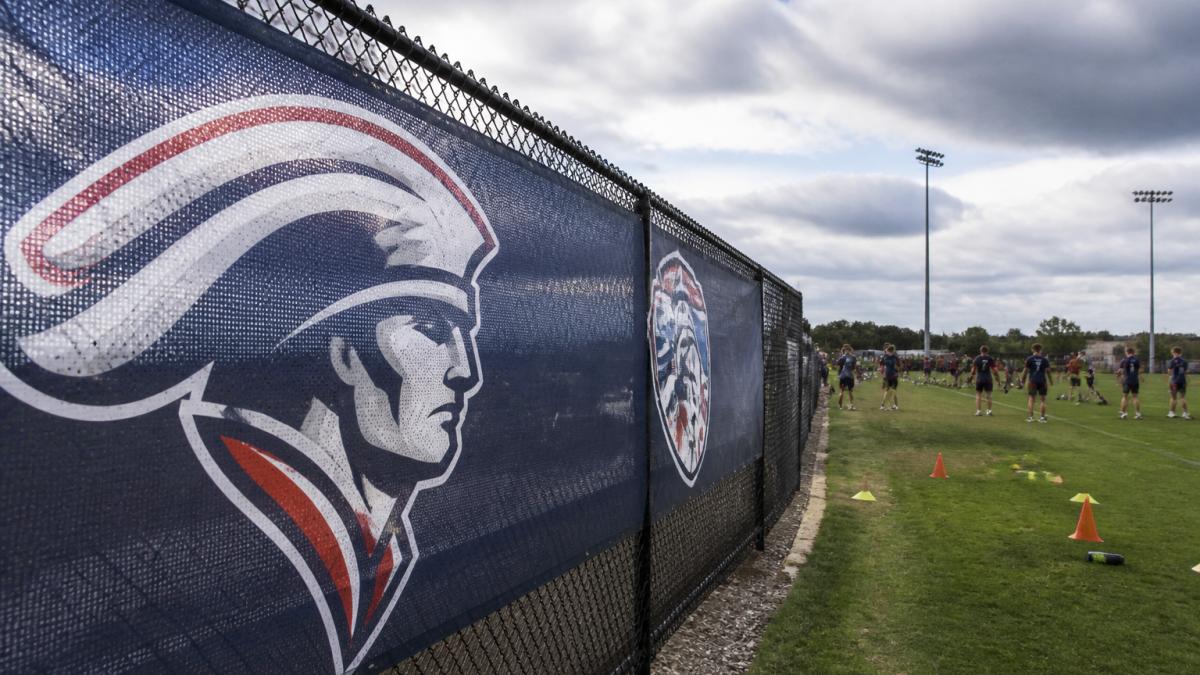
Mesh banners are the answer to mesh banners for windy conditions because the perforated material lets air pass through instead of catching it.
How Mesh Reduces Wind Load
A solid vinyl banner catches wind like a sail. An 8oz mesh banner with a typical 30-40% open weave lets a meaningful share of airflow pass through, which cuts the load on grommets, hems, and fence fabric.
The trade-off is print resolution. The open weave breaks up fine detail, so mesh suits bold logos, large team names, and sponsor marks viewed from 3 meters or more.
Grommet Spacing, Hemming, and Mounting Safety
Mesh banners fail at the edges, not the center. A common pattern for sports field installations is:
- Grommets every 45 to 60 centimeters along all four sides, set in a reinforced hem.
- A double-folded hem with webbing or reinforced stitching on banners wider than 1.2 meters.
- Bungee cords or zip ties through every grommet, attached to the fence fabric or frame, not just the top corners.
On chain-link, the most secure approach is to attach through the grommets to the fence wire itself with UV-rated zip ties, spacing ties every 30 to 45 centimeters in high-wind zones. On frame-mounted field signage, use a tensioned frame system rather than relying on grommets alone.
Player Name and Number Decals →
When Mesh Is the Wrong Choice
Mesh is not a universal upgrade. It is the wrong pick when:
-
The sign is viewed close up and needs fine detail (use aluminum or ACM).
-
The sign is a sponsor board that must read crisply from a distance in low light.
-
The venue is indoor or sheltered, where solid vinyl gives better print quality at similar cost.
-
Pros: Wind passes through, less strain on fences and grommets, lightweight, good for long fence runs, and it is the safest choice for exposed fields.
-
Cons: The open weave lowers print resolution up close, it is not the right pick for a close-viewed rigid board, and it still requires proper grommet spacing and tensioning to perform.
Best for: fence-line branding, open fields, wind-exposed venues, and long runs of chain-link. Skip if: the sign is viewed close up and needs fine detail, or if the mounting surface cannot accept distributed tie points.
5. Heavy-Duty 18oz Vinyl for Sponsor and Championship Banners
Heavy-duty 18oz vinyl is the go-to for sponsor banners and championship banners because it is a solid, tough surface that prints bold logos and holds up outdoors.
For teams, this is the material behind sponsor recognition banners, championship celebration banners, and fundraising displays. You can view the heavy-duty 18oz banner material to compare finishes and hem options before ordering.

- Pros: Tough and fade-resistant, prints bold sponsor logos, holds flat, good for large formats.
- Cons: Solid surface catches wind, so wind holes or mesh are needed in exposed spots, and it is heavier to hang.
Best for: sponsor recognition, championship banners, and fundraiser displays. Skip if: the banner faces constant high wind with no wind holes.
Teams ordering sponsor recognition can go straight to the sponsorship banner to submit team and sponsor logos.

Outdoor Team Signage Maintenance That Extends Every Material
Every material lasts longer with basic care, and the routine is short. Wash signage with mild soap and water, check grommets and mounting hardware each season, and re-tension banners that start to flap.
Store off-season banners rolled, not folded, and keep them out of direct sun in storage. Our deeper guide on sports team banner best practices covers care and longevity in more detail for each material type.
Watch out: mounting a solid banner or ACM panel on an exposed fence without wind relief is the most common cause of early failure.
Ordering Your Team's Signage Package from Artsoft
Matching material to venue is the whole game, and that is where we can take the guesswork out.
Send us your team name, logo, and sponsor files, and we will help you pick the right substrate for each sign's exposure. Have questions before you order? Contact us and we will walk you through the options.
Get started with Artsoft Expo Solutions Inc. and put durable, weather-ready team signage on the field this season.
Frequently Asked Questions
Which materials are most durable for outdoor sports team signage?
Aluminum and aluminum composite panel last longest, often several years with color retention, because they resist rust, moisture and UV fade. Heavy-duty 18oz vinyl and mesh banners come next for large printed areas, while 4mm coroplast suits one to two seasons of temporary use. Match the material to how long the sign stays up and how much wind it faces.
How do mesh banners for windy conditions reduce damage?
Mesh banners are perforated, so air passes through instead of pushing against a solid surface. That cuts the load on grommets, fences and frames, which is why mesh is the standard choice for field fencing and open venues. An 8oz mesh banner from Artsoft starts at $6.00 and can be finished with grommets, pockets, or hems.
Are coroplast signs for sports events a good option?
Yes, for short-term use. Coroplast is a corrugated plastic that is lightweight, waterproof and UV printed, so it handles a season of field or registration signage well. It is less rigid than aluminum and can warp in extreme heat over years. Artsoft's custom lawn sign packs start at $115.00 in 4mm coroplast with optional step stakes.
How long do outdoor sports banners typically last?
Heavy 18oz vinyl banners used seasonally usually hold up for two to three years before fading or edge wear, and aluminum signs can last considerably longer. Lifespan depends on sun exposure, wind and how the banner is stored in the off-season. Rolling rather than folding, and cleaning with mild soap, adds usable seasons to any banner.
What does outdoor team signage maintenance actually involve?
Check grommets and hems each season, clean with mild soap and water rather than solvents, and take banners down before winter storms if the venue closes. Store vinyl rolled on a core in a dry space. Replacing a frayed grommet or restitching a hem costs far less than reprinting a full sponsorship banner.
